Administrations, banks and big companies have computerised everything. But they have never put themselves in our shoes. The result: it is the worker, the boss, the pensioner who do the work in their place. And when there is a mistake, it is our fault.
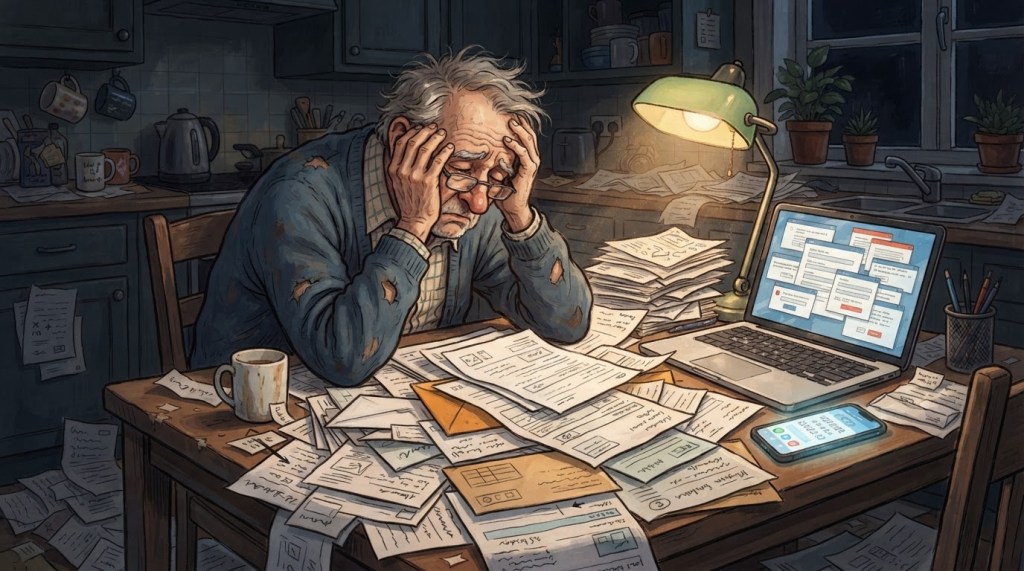
The world upside down
Before, we went to the counter, and someone filled in the file with us. Today, it is up to us to do everything: taxes, the bank, the pension fund, health insurance, the accounts. A password here, a code received by text message there, a box forgotten, and everything is blocked. Then we are blamed for not filling it in properly.
Every time, it is the citizen who has to do everything
It is not once in a while. It is every time, for every procedure. Declaring your income: the citizen. Proving you are alive to receive your pension: the pensioner. Sending the same papers for the tenth time, papers the administration already has: us again. A new piece of software? You have to create a new account, a new password, type everything in again. At the bank, it is the customer who does the counter clerk’s job. In business, it is the boss who does the civil servant’s job. And if the screen freezes, if the website doesn’t work, if the deadline has passed, it is always the citizen who pays.
The citizen does everything, every time. The administration only checks and punishes.
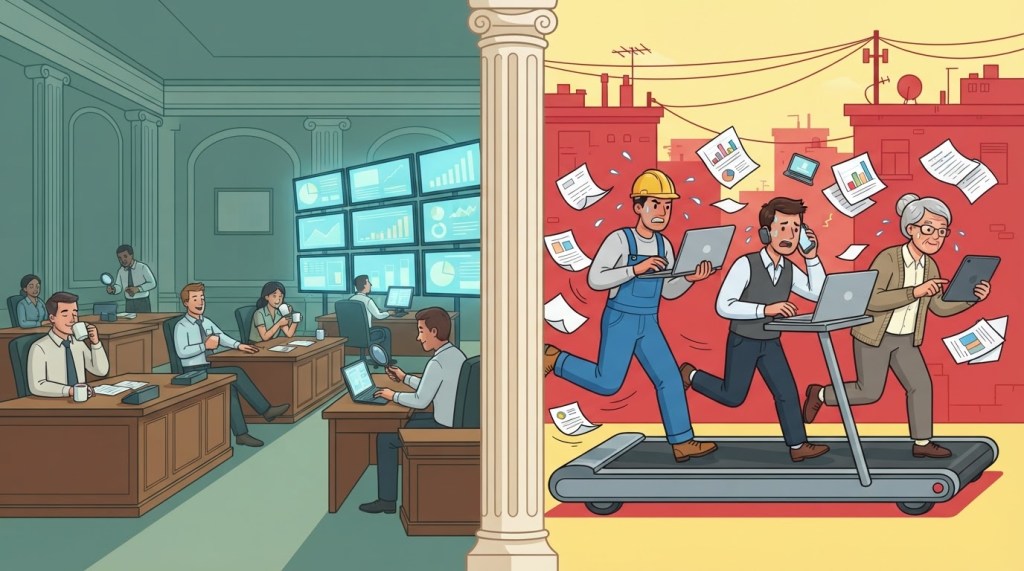
Them at 2 miles an hour, us at 200
Governments have enlarged the administrations, hired staff by the thousands and spent fortunes on computers and software. But the work is done by the citizens. They merely check, again and again. They live at 2 miles an hour. We have to live at 200: double the maximum, and without being paid for it.
The figures confirm it
It is not just an impression. The French Defender of Rights says so herself: every year, more than 80% of the complaints she receives concern public services, almost always with a problem linked to everything going digital. According to her latest survey, published in October 2025, 61% of the users questioned have difficulty with their administrative procedures. And 14 million French people say they do not master digital tools. Those hit hardest: older people, people without qualifications, disabled people, in other words those who most need help.
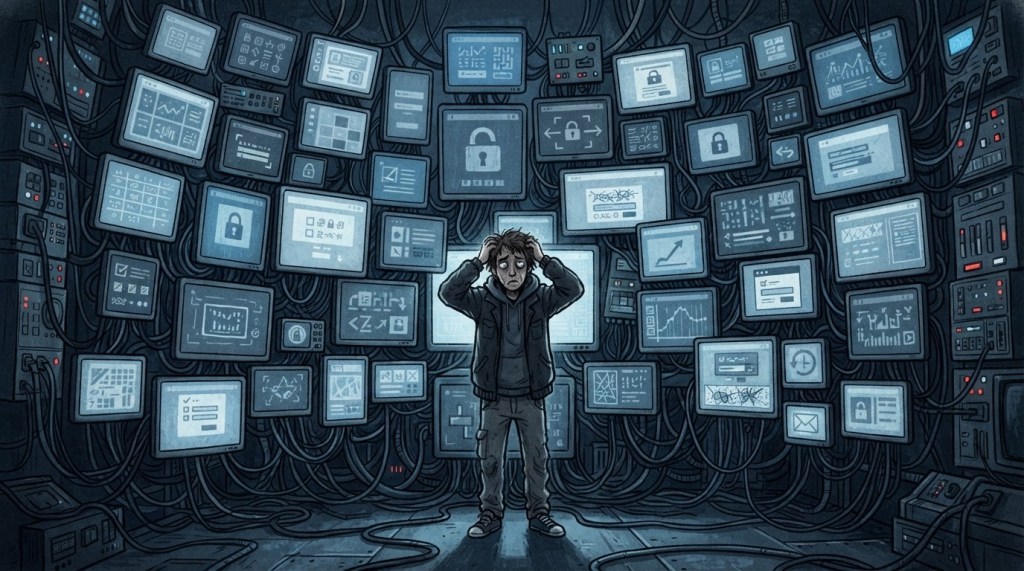
Each his own software, each his own diktat
Even with artificial intelligence, you have to check everything, because every administration has its own software, its own rules, its own screens. At Microsoft or Apple, they ended up standardising everything. In the French administration, everyone works in their own corner, without ever looking at what the neighbour is doing. And every piece of software becomes a diktat for the whole people.
What we want
- One single system, simple and the same everywhere, instead of a hundred programs that don’t talk to each other.
- What the administration already knows, it fills in itself. It is not up to the citizen to copy out what the State has known for a long time.
- Always a human being to talk to, at the counter or on the phone, for those who want it.
- A software error is never the citizen’s fault.
Demosciocracy: putting the administration back at the service of the people
In demosciocracy, the administration serves the people, not the other way round. Those who design the software will first have to put themselves in the shoes of those who use it. This system must stop.
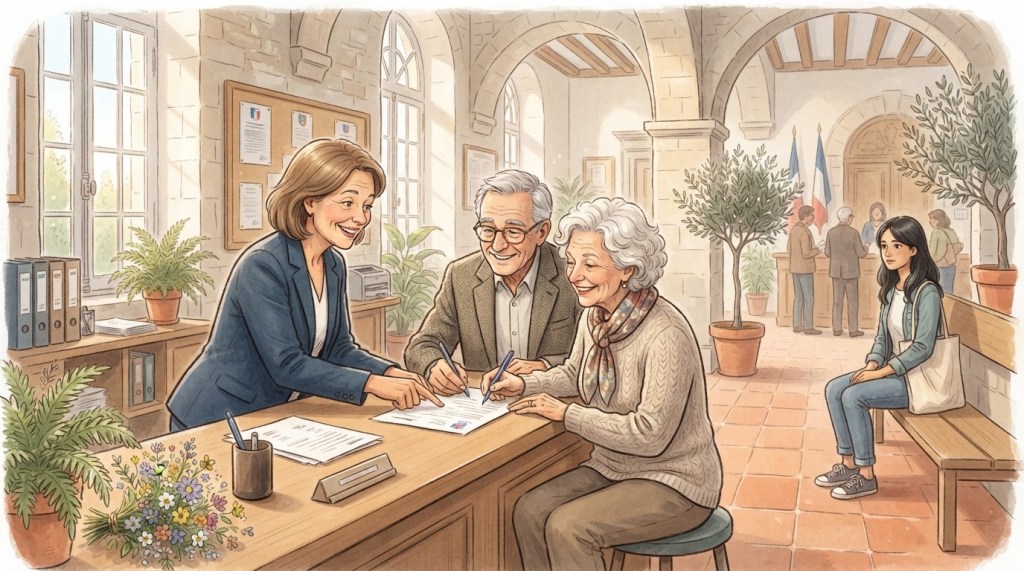
It is not up to the people to work for the administration. It is up to the administration to work for the people.
One single card for every citizen, from birth. A high-capacity card, given to the baby as soon as it is born, that brings everything together: the identity card, the health insurance card, the medical record and the bank card. It is linked to its holder’s eye print: nobody else can use it, fraud becomes very difficult and checks very simple. No more need for ten cards, ten codes and ten programs: one single card, protected, of which the citizen remains the sole master. Nobody can read it without its holder’s consent.
Liberty – Equality – Truth.
Thank you for your comments.
👉 demosciocracy.com
✉️ jacques.rouchaud@me.com


Merci de vos commentaires